
The application of ceramic sand in 3D printing mainly refers to the manufacture of casting cores, molds, or directly molded ceramic parts using binder jetting technology based on powder beds. This is a crucial technology in industrial casting and high-end manufacturing. Below is a detailed explanation of its application principles, processes, advantages, and specific application areas:
I. Core Technology and Principles
Technology Name: Binder Jetting 3D Printing (belonging to the category of “3D Sand Mold Printing”).
Working Principle:
Powder Laying: A layer of extremely fine ceramic sand (usually silica or zirconium sand) is laid on the printing platform.
Binder Jetting: Like an inkjet printer, the print head selectively jets liquid resin binder onto specific areas of the sand layer based on the slicing data of the 3D model.
Curing and Lamination: The binder rapidly penetrates and cures the sand particles, forming the cured structure of the current layer. The platform then descends, laying a new layer of sand powder, and the process is repeated until the workpiece is complete.
Post-processing: After printing, the workpiece is embedded in uncured sand powder. After removal, it is cleaned by sandblasting, and then subjected to post-processing such as drying and impregnation strengthening as needed.
II. Detailed Application Process
Material Preparation:
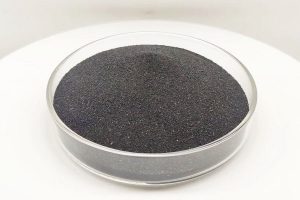
Ceramic sand must meet requirements such as high purity, uniform particle size (typically 100-300 micrometers), and good flowability to ensure printing accuracy and surface quality.
The binder is a special resin (such as furan resin or phenolic resin), which must ensure rapid penetration and curing strength.
Printing Process:
No supporting structure is required; the unbonded sand powder naturally forms a support, allowing for the printing of extremely complex geometries (such as hollow channels and irregular curved surfaces).
Key Post-processing Steps:
Cleaning: Loose sand powder is blown away with compressed air.
Cure and Strengthening: Typically, low-temperature baking (~200℃) or impregnation with special coatings (such as silica sol) is performed to improve the core strength and resistance to molten metal erosion.
Directly for Casting: The treated ceramic sand core/mold is assembled into a traditional sand mold, and molten metal is poured in.
III. Core Advantages
* **Mold-Free, Flexible Manufacturing:** Complex casting cores are manufactured directly from digital models, breaking the limitations of traditional molds. This is especially suitable for prototyping, small-batch production, and complex structural castings.
* **High Precision and Surface Quality:** Fine features can be printed (minimum wall thickness can reach 1-2mm), and surface roughness can reach Ra 12-25μm, reducing subsequent machining.
* **Extreme Design Freedom:** Shapes that cannot be manufactured using traditional methods, such as internal conformal cooling channels, multi-cavity structures, and hollow structures, can be achieved, optimizing part performance (e.g., lightweight, uniform heat dissipation).
* **Material and Cost Efficiency:** Unused sand powder can be recycled and reused (recycling rate is typically >95%), suitable for large workpieces (up to several meters in length).
* **Rapid Delivery:** The cycle from drawings to usable sand mold/core can be shortened from weeks to days.
IV. Main Application Areas
* **High-End Casting Industry:**
* **Engine Blocks/Cylinder Heads:** Cores for manufacturing complex water-cooling channels. Aerospace Components: Casting molds for turbine blades and air intakes (using high-temperature resistant zirconium sand or ceramic sand).
Pumps/Valve/Hydraulic Components: Parts with complex flow channels.
Direct Functional Ceramic Manufacturing:
Porous ceramic filters, catalyst carriers, refractory components, etc., can be manufactured through high-temperature sintering after printing.
Art and Architecture:
Prototypes or molds for direct casting of large sculptures and decorative components.
V. Technological Challenges and Development
Challenges:
Strength and Brittleness: Ceramic sand-printed parts are relatively brittle, requiring post-processing reinforcement.
Dimensional Accuracy Control: Affected by factors such as sand particle size and binder diffusion, requiring precise adjustment of process parameters.
Environmental Protection and Safety: Binders may contain volatiles, requiring ventilation; dust issues need to be addressed during old sand regeneration.
Frontier Directions:
Nano-binders/Composite Sand: Improving the strength and surface finish of printed parts.
Intelligent Post-Processing: Combining AI to optimize baking and impregnation processes.
Multi-material printing: embedding cooling copper pipes or sensors into sand molds to achieve “smart molds”.